Anion Gap Calculator for Checking Alkalemia
What the Anion Gap Measures in Acid-Base Balance
The anion gap is a useful way to examine acid-base balance using common electrolytes from a serum chemistry panel. It can estimate the difference between measured positive and negative ions, which can suggest an underlying acid-base disorder that is not obvious from pH alone. In clinical interpretation, the gap is especially useful because serum bicarbonate may look reassuring even when a hidden metabolic problem is present.
At a basic level, the calculation reflects the relationship between serum sodium, serum chloride, and serum bicarbonate. Since many unmeasured anions are not directly reported, the gap acts as a diagnostic tool for identifying shifts in serum chemistry that suggest extra acids or loss of bicarbonate. This makes it a important part of a broader metabolic evaluation.
Although many clinicians first associate the anion gap with acidosis, it also supports anion gap interpretation in alkalemia. The reason is simple: a normal pH does not guarantee normal physiology, and a high or low gap can point to an underlying disorder even when the dominant acid-base picture is alkalosis. That is where structured assessment becomes important.
How to Work with an Anion Gap Calculator
An Anion Gap Calculator relies on a basic math formula based on routine laboratory values. The standard inputs are serum sodium, serum chloride, and serum bicarbonate. A common formula is:
Anion gap = sodium - (chloride + bicarbonate)
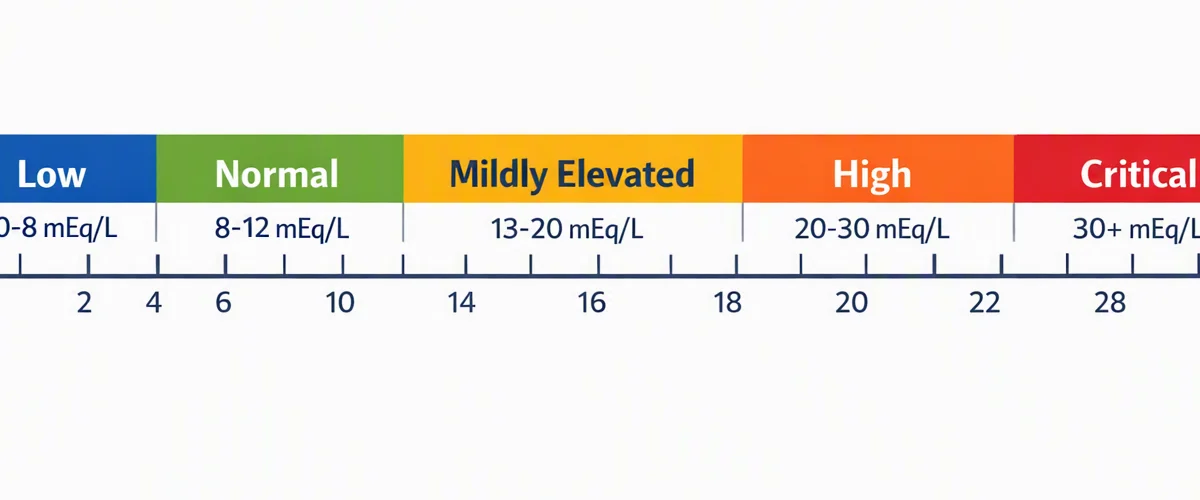
This calculation yields a number that can be checked with the laboratory reference range. The exact range varies by lab and by whether potassium is included, so the calculator should always be interpreted in the context of the local laboratory values and methodology used.
To use the tool well, type the values exactly as reported from the electrolyte panel. Small input errors can change the result enough to affect interpretation, especially when you are evaluating a possible mixed acid-base disorder. Once the number is generated, check it with the expected range and consider whether the pattern suggests a normal anion gap, high anion gap, or low anion gap state.
For best diagnostic accuracy, apply the calculator as part of a larger review rather than a standalone answer. The anion gap is one piece of the puzzle, and its value becomes most useful when matched with clinical context, blood gas analysis, and the patient’s overall picture.
Anion Gap in Alkalemia: Why It Still Matters
Alkalemia commonly points to either metabolic alkalosis or respiratory alkalosis, but the apparent dominant process may conceal another acid-base disorder. A patient can have an elevated pH and still have a concurrent high anion gap process that would otherwise be missed. This is why the anion gap matters even when the blood gas points toward alkalemia.
In metabolic alkalosis, bicarbonate is commonly raised, which can make the acid-base picture appear clear. However, a higher-than-expected gap may signal a second process such as lactic acidosis or ketoacidosis. In respiratory alkalosis, hyperventilation lowers carbon dioxide and may also coexist with another metabolic disturbance. In both cases, the calculator helps uncover a mixed acid-base disorder.
Alkalemia can therefore be misleading if you focus only on pH and bicarbonate. A careful review of the anion gap offers a better metabolic evaluation because it can expose hidden acidosis, abnormal electrolyte abnormalities, or a second process that changes treatment priorities. This is especially important when the clinical picture does not match the presumed diagnosis.
Revising the Anion Gap for Albumin
albumin is the main unmeasured anion in plasma, so shifts in albumin can significantly affect the measured gap. When albumin is low, the anion gap may appear falsely normal or even low. This is why an albumin-corrected anion gap is often more helpful than the unadjusted value.
Reduced albumin lowers the baseline anion gap, which can mask a high anion gap process. In this setting, the corrected anion gap modifies the measured result to better reflect the true burden of unmeasured acids. Many clinicians use a straightforward correction approach based on the albumin level, then reassess whether the corrected value falls into the high anion gap range.
Albumin correction is particularly crucial in sick patients, where low albumin is common and hidden acidosis may be present. Without this step, a patient with significant pathology could be misclassified as having a normal anion gap. That is why albumin correction improves interpretation and supports more accurate clinical correlation.
When you review the result, ask whether the measured gap and corrected value tell the same story. If they differ, the corrected number should generally guide further thinking about the underlying disorder.
Stepwise Review of Findings
A practical way to handle anion gap interpretation is to move through a clear series. Initially, identify whether the result is within the normal anion gap interval for the lab. Next, ask whether the number is obviously elevated or unexpectedly low. Finally, align the pattern with the acid-base picture from the blood gas and chemistry panel.
If the result is within the normal anion gap reference range, that does not automatically exclude an abnormality. A normal gap may fit with non-gap metabolic processes or may reflect a masked high gap condition when albumin is low. If the value is high, think about added unmeasured acids. If it is low, consider laboratory artifact or unusual protein states.
A high anion gap points to presence of unmeasured anions. In alkalemia, this may signal a dual acid-base disorder, where a metabolic alkalosis or respiratory alkalosis is accompanied by hidden acidosis. A low anion gap is less common but should not be ignored because it can point to hypoalbuminemia, paraprotein effects, or analytic issues.
For effective acid-base interpretation, ask four questions:
- Is the gap fit the serum bicarbonate and pH?
- Is the albumin level low enough to support correction?
- Could there be a hidden high anion gap process?
- Does the overall clinical presentation support the calculation?
This organized approach improves interpretation and helps avoid overreliance on any single number.
Typical Causes of Elevated or Low Anion Gap
Several conditions can raise the anion gap by adding unmeasured acids to the blood. Lactic acidosis is a frequent cause, especially in poor tissue perfusion, sepsis, or other states with impaired oxygen delivery. Ketoacidosis can also cause a high gap through collection of ketone-related anions. Both processes may coexist with alkalemia if another disorder is pushing pH upward.
Renal failure can increase the gap because the kidneys cannot clear acid adequately, allowing unmeasured anions to accumulate. This can become especially relevant in patients whose blood gas suggests alkalemia from a separate process. In delta ratio identifies mixed acidosis that setting, the Anion Gap Calculator becomes a diagnostic tool for revealing a more complex acid-base disorder.
A low anion gap is uncommon but still clinically meaningful. Paraproteinemia can reduce the gap because abnormal proteins alter the charge balance in plasma. Hypoalbuminemia is another major cause and is often the most important explanation in hospitalized patients. Artifact, chloride measurement differences, and other electrolyte abnormalities can also contribute.
The key point is that both elevated and low results require clinical correlation. The number alone does not define the diagnosis; it points toward the probable underlying disorder and guides the next step in evaluation.
When Elevated pH Conceals an Underlying Acidosis
One of the most important uses of the anion gap is detecting a combined acid-base disorder when alkalemia is present. A patient may have base excess from emesis, diuretic therapy, or reduced volume, but also have a simultaneous high anion gap metabolic acidosis from another process. The overall pH can still be alkalemic, which can postpone recognition of the acidotic component.
The gap comparison is a practical concept in this setting. It compares the change in the anion gap with the change in bicarbonate to see whether the rise in gap is disproportionate to the drop in bicarbonate. If the values do not match the expected pattern, a second acid-base process may be present. This is especially valuable when the chemistry profile and blood gas seem inconsistent.
Alkalemia can therefore be a covering effect rather than a reassuring one. A patient with metabolic alkalosis might also have lactic acidosis from poor perfusion, ketoacidosis from insulin deficiency, or renal failure with retained acids. In such cases, the elevated pH should not distract from the possibility of hidden acidosis.
A thorough review of the calculator result, the blood gas, and the clinical setting helps identify these mixed states. This increases the chance of timely treatment and better diagnostic accuracy.
Constraints of the Calculator and Clinical Context
The Anion Gap Calculator is valuable, but it has important limitations. Different laboratories use different analytic methods, so the laboratory reference range may vary. A result that seems abnormal in one setting may be acceptable in another, which is why local standards matter.
Both arterial blood gas and venous blood gas testing aid to interpretation, but they are not interchangeable. An arterial blood gas is often preferred for precise respiratory and acid-base evaluation, while a venous blood gas may be adequate in some situations for screening or trend assessment. Either way, the gap should be reviewed alongside pH, carbon dioxide, and bicarbonate rather than in isolation.
Clinical correlation is essential. Symptoms, medication history, kidney function, perfusion status, toxin exposure, and nutritional state all influence how the result should be read. A calculator can flag a possible issue, but it cannot determine the full diagnosis on its own. That is why the best use of the tool is within a broader comprehensive assessment.
In practice, the calculator supports better interpretation by highlighting patterns that stand out. It does not replace bedside judgment, but it strengthens the clinician’s ability to identify the underlying disorder and avoid missing hidden acidosis in a patient with alkalemia.
FAQ: Anion Gap Calculator for Alkalemia Evaluation
What is an anion gap calculator used for in alkalemia evaluation?
An Anion Gap Calculator is used to estimate the anion gap from routine laboratory values and help determine whether alkalemia is hiding another acid-base disorder. It is especially useful for identifying a concurrent high anion gap process, such as hidden acidosis, when the pH suggests alkalosis. This makes it a useful diagnostic tool for acid-base interpretation and clinical correlation.
Can alkalemia occur with a high anion gap?
Yes. Alkalemia can coexist with a high anion gap when there is a mixed acid-base disorder. For example, a patient may have metabolic alkalosis or respiratory alkalosis while also having lactic acidosis or ketoacidosis. The net pH may remain elevated, so the anion gap helps reveal the underlying disorder.
How do you correct the anion gap for albumin?
To adjust albumin, the measured reading is raised when hypoalbuminemia is present, because low albumin can make the gap look falsely normal. This yields an albumin-corrected anion gap, sometimes referred to as the corrected anion gap. The corrected value is often more precise for assessing whether a high anion gap process is present.
What does a normal anion gap mean in a patient with alkalemia?
A normal anion gap in a patient with alkalemia may indicate that there is no additional high-gap metabolic process, but it does not rule out all acid-base problems. The patient may still have metabolic alkalosis, respiratory alkalosis, or a non-gap acid-base disorder. Albumin correction and full blood gas analysis are important before drawing conclusions.
When should you suspect a mixed acid-base disorder?
Suspect a mixed acid-base disorder when the pH, bicarbonate, carbon dioxide, and anion gap do not match a single diagnosis. This is especially important if alkalemia is present but the patient also has signs of lactic acidosis, ketoacidosis, or renal failure. A delta gap can help detect a hidden acidosis that is being masked by metabolic alkalosis or respiratory alkalosis.