Anion Gap Calculator for Metabolic Acidosis Assessment
What the Anion Gap Measures
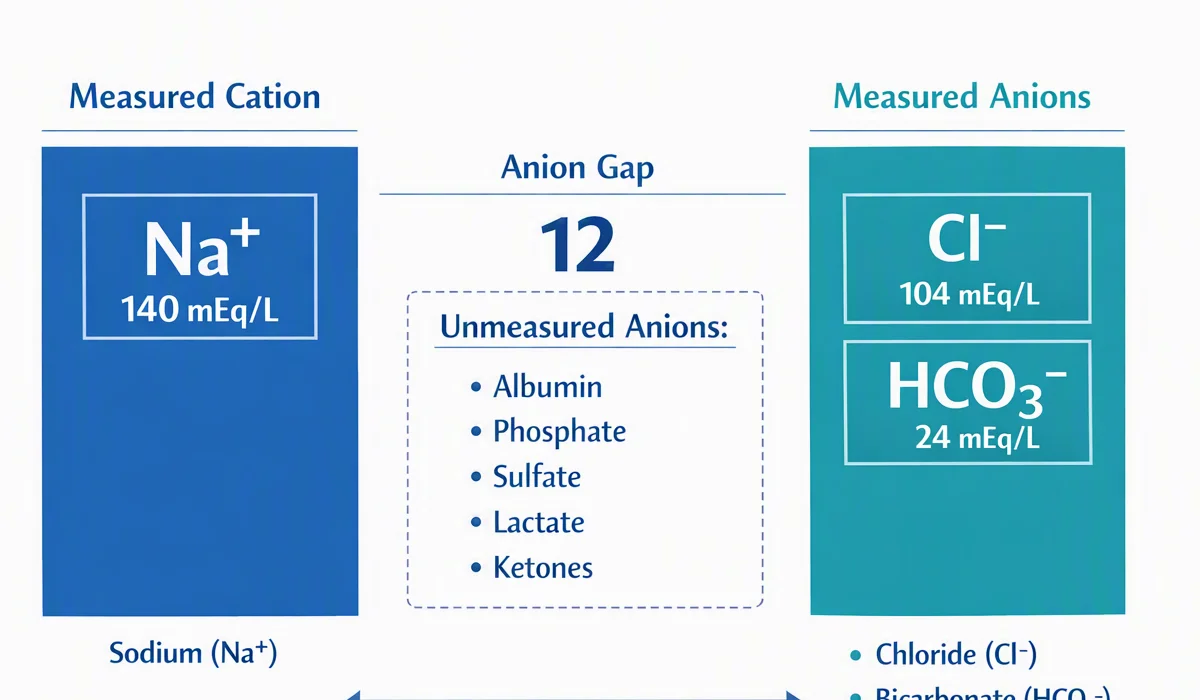
The anion gap is a useful way to approximate the balance between measured cations and measured anions in the blood. In practical terms, it helps clinicians and learners evaluate whether an electrolyte panel suggests an acid-base problem, especially metabolic acidosis. The concept is simple: routine labs measure several electrolytes, including sodium and chloride, but they do not individually measure every charged particle in circulation.
That gap between what is measured and what is not measured is the core of the calculation. Those “missing” particles often include unmeasured anions such as lactate, ketones, and certain toxins. When the gap is elevated, it can point toward a metabolic derangement with excess acid production or reduced acid clearance. When it is normal, the problem may instead involve bicarbonate loss or a chloride-related shift.
Because the anion gap reflects blood chemistry rather than a single diagnosis, it is best viewed as a diagnostic tool within a larger clinical interpretation. It does not confirm a disease on its own, but it can rapidly narrow the likely etiology of systemic acidosis and support next steps in the diagnostic workflow.
How to Work With an Anion Gap Calculator
An anion gap calculator is built to make the calculation fast and consistent. To use it, enter the values from the basic chemistry panel: serum sodium, serum chloride, and serum bicarbonate. Some calculators may also include serum albumin so they can apply an albumin correction when needed.
The calculator typically runs the arithmetic right away, helping you estimate whether the laboratory values indicate a normal or elevated gap. That convenience is especially helpful when interpreting a busy serum chemistry panel, but the result still needs context. The number alone does not diagnose the cause of acidosis; it only guides you to the most likely pattern.
A practical way to use the tool is to follow a simple sequence:
- Examine the electrolyte levels on the electrolyte panel.
- Enter serum sodium, serum chloride, and serum bicarbonate into the anion gap calculator.
- See whether the result falls into a normal or elevated anion gap.
- Compare the result with the clinical picture, acid load, and possible causes.
- Determine whether serum albumin should be used for correction.
For clinicians, this calculation is part of a larger interpretation guide. For students and non-specialists, it is a structured way to move from raw numbers to meaningful reasoning about acid-base balance. The calculator can help reveal a bicarbonate deficit or a pattern suggesting excess acid generation, but it should always be paired with clinical judgment.
Anion Gap Formula and Normal Ranges
The common anion gap formula is given as:
Anion gap = serum sodium - (serum chloride + serum bicarbonate)
This formula approximates the discrepancy between the main measured cation and the measured anions in standard blood chemistry. In most cases, the value falls within a reference interval that is considered the normal anion gap. The exact range vary by laboratory method, but the general pattern is stable enough to aid diagnosis when read properly.
The normal urine anion gap formula for RTA result is not “zero” because blood contains many charged particles that are not directly included in the formula. Such unmeasured substances, including proteins and organic acids, account for the difference. That is why the anion gap is useful as a proxy for anion concentration and changes in acid-base balance.
Albumin matters because it is one of the main unmeasured anions. When serum albumin is low, the gap may appear falsely normal or only mildly elevated. This is where albumin correction becomes important. A corrected result can better reflect the true burden of unmeasured anions and reduce the risk of missing a significant acid-base disorder.
Although formulas may vary slightly between institutions, the key idea remains the same: the number provides a preliminary estimate, not a final diagnosis. A anion gap in chronic kidney disease careful review of laboratory values and the patient’s overall condition is still crucial.
Elevated Anion Gap vs Typical Anion Gap Acidosis
Metabolic acidosis is an acid base imbalance characterized by decreased serum bicarbonate and elevated acid burden or bicarbonate loss. The anion gap helps distinguish this into two broad categories: high anion gap metabolic acidosis and normal anion gap metabolic acidosis.
In high anion gap metabolic acidosis, the body has accumulated unmeasured acids. The gap rises because more negatively charged molecules appear in the circulation, raising the amount of unmeasured anions. This often suggests an acid load from lactate, ketones, toxins, or poor clearance of acids normally.
In normal anion gap metabolic acidosis, bicarbonate is depleted or replaced by chloride in a way that keeps the calculated gap near the reference interval. This is often called hyperchloremic acidosis because chloride rises as bicarbonate falls. The pattern can still represent significant illness even when the anion gap appears normal.
Distinguishing between these two patterns helps identify the most likely etiology. High-gap states tend to suggest retained acids or higher acid production, while normal-gap states more often reflect loss of bicarbonate or impaired renal handling. A thoughtful interpretation should always consider the whole metabolic context, not only the calculated number.
Frequent Causes of High Anion Gap Acidosis
Various conditions commonly produce high anion gap metabolic acidosis. A particularly important one is lactic acidosis, which occurs when lactate builds up due to tissue hypoperfusion, hypoxia, seizures, severe infection, or other stress states. Lactate is an unmeasured anion, so it increases the gap and signals a major metabolic shift.
Ketoacidosis is a further leading cause. In diabetic ketoacidosis, alcoholic ketoacidosis, and starvation states, ketone production rises and contributes to the acid burden. These ketones add a clear acid load and often lead to a notable bicarbonate deficit.
Renal failure can also lead to high-gap acidosis because the kidneys can no longer to excrete acids effectively. As acids accumulate, the anion gap increases and the blood becomes more acidic. In advanced cases, the disturbance may be mixed with other metabolic changes, so the result should be interpreted with the full clinical picture.
Toxic alcohols are a classic high-gap cause as well. Substances such as methanol and ethylene glycol are metabolized into acidic compounds that widen the gap and create dangerous systemic acidosis. Because these exposures can be life-threatening, a high-gap pattern should prompt careful history-taking and urgent evaluation when clinically suspected.
Other causes of a high anion gap may include salicylate toxicity, severe rhabdomyolysis, and some inborn errors of metabolism, but the four causes above are among the most important to recognize quickly. The anion gap calculator can help identify the pattern, but the next step is to connect the result to the likely source of the acid burden.
Frequent Causes of Normal Anion Gap Acidosis
Normal anion gap metabolic acidosis commonly reflects a reduction in bicarbonate rather than accumulation of unmeasured acids. One common cause is diarrhea, which can result in marked gastrointestinal bicarbonate loss. As bicarbonate declines, chloride goes up to maintain electroneutrality, producing a classic pattern of hyperchloremic acidosis.
Renal tubular acidosis is an additional important cause. In this group of disorders, the kidneys cannot properly reabsorb bicarbonate or excrete hydrogen ions. The result is a ongoing acid-base disorder with a normal or only slightly shifted anion gap. Because the condition may be hard to detect, it is often identified through structured assessment of blood chemistry and urine findings.
Normal-gap acidosis can also occur after giving of substantial volumes of chloride-rich fluids, in urinary diversions, or in some early renal disorders. These causes all tend to produce a pattern where bicarbonate drops and chloride goes up, but the anion gap remains within the expected interval.
This pattern does not mean the process is minor. A patient can have severe acidemia even with a normal gap, which is why the calculator should be paired with patient symptoms, volume status, medication review, and kidney function assessment. The key is to recognize that the mechanism is not the same, not that the problem is less important.
How Albumin Impacts Anion Gap Analysis
Hypoalbuminemia can substantially affect how the anion gap is interpreted. Because serum albumin carries negative charge, it adds significantly to the baseline gap. When albumin is low, the measured gap may look falsely normal even if unmeasured acids are present.
This is why albumin correction is so essential. A corrected anion gap modifies the result to account for reduced albumin and can reveal hidden elevations that would otherwise be missed. In patients with severe illness, malnutrition, inflammation, or liver disease, this adjustment may shift the entire interpretation.
The role of albumin also ties to protein binding and the chemistry of circulating ions. Since proteins help shape the baseline charge balance, a low-protein state can lower the apparent gap without actually improving the underlying acid-base problem. That means a “normal” number does not always mean normal physiology.
For this reason, any serious review of the anion gap should include serum albumin when available. If the albumin is reduced, the corrected value may better reflect the true degree of metabolic derangement and improve more accurate clinical interpretation.
Clinical Interpretation and Next Steps
The calculated anion gap is most helpful when it is paired with broader clinical assessment. If the result reveals a high gap, the next step is to determine whether the patient has lactic acidosis, ketoacidosis, renal failure, toxic alcohol exposure, or another cause of increased acid burden. When the gap is normal, consider bicarbonate loss, renal tubular acidosis, or a mixed disorder.
An arterial blood gas can be especially helpful. In addition to blood gas analysis, it clarifies pH, respiratory compensation, and the presence of concurrent disorders. A patient may have a profound acid-base abnormality even when the chemistry panel only hints at the problem. The combination of blood gas analysis and electrolyte data gives a fuller view of systemic acidosis.
Checking lactate is often a key next step when the gap is elevated or the patient appears ill. Elevated lactate can rapidly suggest lactic acidosis, while ketones, kidney function, osmolar gap, and toxicology testing may be needed depending on the scenario.
A strong diagnostic workflow generally includes:
- Confirm the result with repeat laboratory values if needed.
- Evaluate the patient’s symptoms, vital signs, and volume status.
- Review the electrolyte panel, serum albumin, and renal function.
- Obtain arterial blood gas or blood gas analysis when indicated.
- Apply lactate, ketones, and exposure history to narrow the etiology.
The calculator is not the endpoint. It is the first step for structured reasoning about metabolic acidosis and its cause.
Limitations of the Calculator
Even a well-designed anion gap calculator has important limits. One issue is lab error. Small analytical differences in sodium, chloride, or bicarbonate can alter the result enough to change the interpretation, especially near the upper or lower edge of the reference range.
Another limitation is that the calculator depends on the accuracy of the source data. If the underlying electrolyte imbalance is multifaceted, the calculated value may not entirely capture the true disorder. Combined acid-base disturbances, rapidly changing clinical status, and sample handling problems can all reduce accuracy.
There are also wider diagnostic limitations. The anion gap does not identify every cause of acidosis, and a normal value does not rule out a serious illness. It is a component of the overall assessment and should be interpreted alongside symptoms, blood gas results, kidney function, and the full electrolyte panel.
In other words, the calculator is best viewed as a support tool. It enhances efficiency and consistency, but it does not replace clinical judgment or a complete acid-base evaluation.
Frequently Asked Questions
What is a normal anion gap range?
The anion gap normal range depends on the laboratory method and the institution’s reference interval. In general, many labs consider a mid- to low-teens result to be normal, but exact cutoffs vary. The most important step is to interpret the number using the range reported with the patient’s own blood chemistry results.
How do you calculate the anion gap using sodium, chloride, and bicarbonate?
Use the anion gap formula: serum sodium minus the sum of serum chloride and serum bicarbonate. In other words, serum sodium - ( serum chloride + serum bicarbonate). An anion gap calculator can do this automatically and help speed up clinical interpretation.
Why is albumin correction important when interpreting the anion gap?
Albumin correction matters because serum albumin is a major unmeasured anion. If albumin is low, the gap may appear falsely normal. Correcting for hypoalbuminemia can reveal a hidden elevation and improve the accuracy of the overall assessment.
Which conditions lead to a high anion gap metabolic acidosis?
Common causes of high anion gap metabolic acidosis include lactic acidosis, ketoacidosis, renal failure, and exposure to toxic alcohols. Such conditions raise unmeasured acids in the blood and raise the calculated gap.
Can a normal anion gap still occur with serious acidosis?
Absolutely. Normal anion gap metabolic acidosis can still be serious, especially when caused by diarrhea, renal tubular acidosis, or other forms of bicarbonate loss. A normal gap does not rule out serious illness, so the result should always be reviewed in the full clinical context.