How to Apply an Anion Gap Calculator for Blood Work
How the anion gap determines
The anion gap is a helpful way to look at the balance of electrolytes in the blood and to evaluate acid-base balance. It is not a direct reading of a single substance. Instead, it is a calculated value that indicates the difference between positive and negatively charged particles in the bloodstream. Clinicians often use it as a clue when investigating metabolic acidosis and other acid-base disorder patterns.
In everyday terms, the anion gap helps detect whether there may be unmeasured acids or other abnormal substances affecting serum levels. Because it is derived from common lab values, it is a valuable diagnostic tool when reviewing blood test results. The result can point toward an electrolyte imbalance or another metabolic disorder that needs more assessment.
Although the number itself is easy to interpret, its clinical significance depends on the whole picture. A mildly abnormal result may be less concerning than a dramatic change with symptoms. That is why an anion gap should always be considered alongside the patient’s condition, the reference range, and the rest of the chemistry results.
How an anion gap calculator functions
An Anion Gap Calculator uses basic lab values to calculate anion gap rapidly and consistently. Most calculators ask for sodium, chloride, and bicarbonate, which are usually listed on a standard chemistry report. By entering those values, the calculator uses the anion gap formula and returns a result that can be compared with the expected reference range.
The reason this works is that sodium is the main measured cation, while chloride and bicarbonate account for major measured anions. The difference between them gives a useful estimate of unmeasured ions in the blood. When the gap is widened, clinicians may search for acids that are not directly measured on a routine electrolyte panel.
An Anion Gap Calculator is especially helpful when reviewing complex blood test results or checking whether an abnormal value matches the overall pattern. It can support more rapid interpretation, but it does not replace clinical judgment. The same number can have different meaning depending on the patient, the lab method, and the other lab values present.
Formula for anion gap and calculation examples
The most widely used anion gap expression is:
Anion gap = serum sodium − (serum chloride + serum bicarbonate)
This calculation uses serum sodium, serum chloride, and serum bicarbonate from a routine chemistry result. Some labs use a slightly different method, and older versions of the equation include potassium, but the sodium-based version is commonly used in routine practice.
For example 1, if the serum sodium is 140, the serum chloride is 102, and the serum bicarbonate is 24, the anion gap is 140 − (102 + 24) = 14. That result may fall within the laboratory reference range depending on the method used.
Example 2: when the serum sodium is 138, the serum chloride is 100, and the serum bicarbonate is 12, the anion gap is 138 − (100 + 12) = 26. That higher value raises concern for high anion gap metabolic acidosis and should lead to review of the full clinical picture.
Example 3: if the sodium is normal but bicarbonate is low with a normal gap, this may point toward normal anion gap metabolic acidosis. The calculator assists in identifying the pattern, but interpretation depends on the cause and associated findings.
Standard anion gap interval and what changes it
The reference range for anion gap varies by laboratory because of differences in measurement methods and result standards. That is why the laboratory reference range listed on the report is more important than a single cutoff. A result that seems high in one lab may be expected in another.
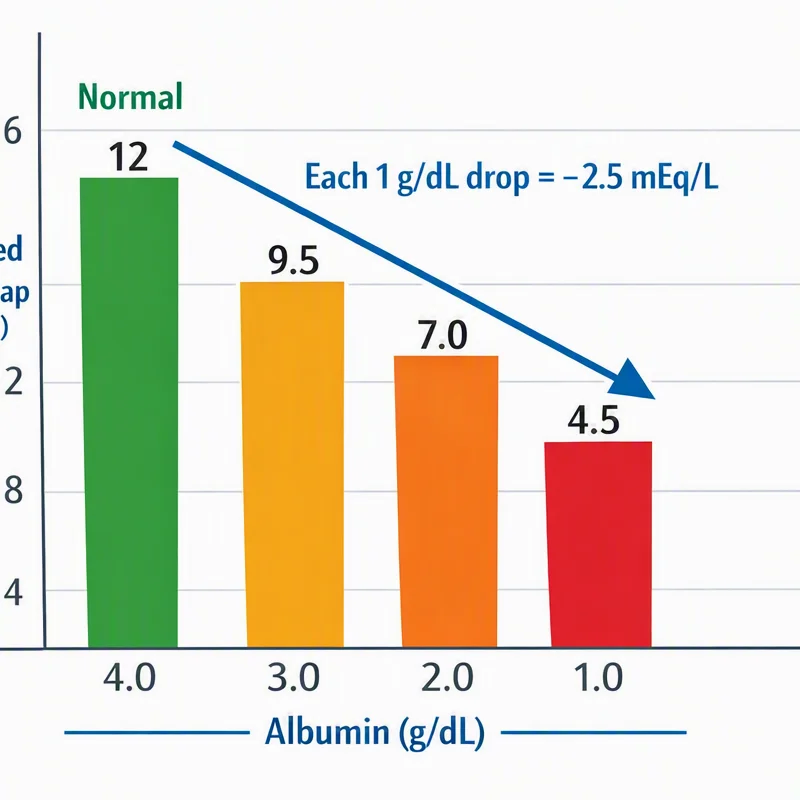
Albumin is one of the most important factors that influences the result. Since albumin is a negative-charged protein, lower albumin levels can make the gap appear reduced than it truly is. In patients with low albumin, albumin correction may be necessary to help estimate the true gap. This is one reason a single number should not be interpreted in alone.
Other influences include shifts in measured cations, shifts in protein levels, and variations in analyzer techniques. Some medications, toxins, and uncommon blood proteins can also affect the value. For this reason, interpreting the anion gap is not just a numerical issue; it is a assessment of chemistry, context, and pattern recognition.
Elevated anion gap versus normal anion gap
A elevated result often points toward high anion gap metabolic acidosis, which occurs when excess acids collect in the blood. Common causes include lactic acidosis, ketoacidosis, and kidney failure. In these situations, bicarbonate is consumed as the body counteracts excess acid, and the gap rises because the missing bicarbonate is replaced by unmeasured anions.
Lactic acidosis can occur when tissues do not get enough oxygen, when severe infection is present, or when other systemic stressors drive lactate production. Ketoacidosis is often associated with diabetes, alcohol use, or prolonged fasting. Kidney failure can reduce the body’s ability to clear acids, which also raises the gap.
By contrast, normal anion gap metabolic acidosis usually reflects a loss of bicarbonate rather than buildup of unmeasured acid. Common mechanisms include gastrointestinal bicarbonate loss or renal tubular problems. The gap stays normal because chloride often rises to compensate for the loss of bicarbonate, even though the patient still has an acid-base problem.
Understanding whether the pattern is high or normal is a major step in the interpretation of the result. Both patterns can indicate a serious metabolic disorder, but they point toward different underlying cause pathways and therefore different next steps.
Reduced anion gap causes along with clinical implications
A low anion gap is less common than a high one, but it can still be clinically meaningful. One of the leading reasons is hypoalbuminemia, because albumin plays a major role to the unmeasured anions in blood. When albumin is low, the gap may decrease even if there is no true acid-base abnormality.
Albumin correction is especially useful here. If the albumin is low, a corrected calculation may show that the apparent low gap is mostly driven by reduced protein levels rather than a separate disorder. This avoids overcalling an abnormal result and supports identify the real issue.
Other causes include lab artifact, elevated unmeasured positively charged proteins, and certain medications or toxins. Multiple myeloma is a classic clinical association because abnormal immunoglobulins can reduce the gap. Lithium exposure can also decrease the gap because lithium is an unmeasured cation that may change the balance of charged particles.
A low value should not be overlooked, but it should also not be read too strongly without the full picture. The result may reflect protein changes, medication effects, or measurement issues rather than a dangerous acid-base problem. That is why review of the full chemistry report and clinical scenario is important.
How to understand anion gap in blood test results
Good lab result interpretation starts with the full set of electrolytes, not just one number. The anion gap should be considered alongside sodium, chloride, bicarbonate, kidney function, glucose, and additional abnormal labs. A single abnormal result may be less important than a consistent pattern across several measurements.
First, confirm that the values came from a trusted chemistry blood panel and that the reported laboratory reference range matches the method used by that lab. Afterward, look at the bicarbonate level. If bicarbonate is low, ask whether the anion gap is high, normal, or low, because that distinction can guide the diagnosis.
After that, consider the overall clinical picture. Symptoms, recent illness, medications, fluid status, kidney function, and nutrition all play a role. For example, low albumin from chronic illness can affect the interpretation, while signs of infection or poor perfusion may make lactic acidosis more likely. This is where the calculator becomes more than just a mathematical shortcut; it helps with structured clinical reasoning.
It is also important to recognize that the anion gap is a screening clue, not a final diagnosis. A result can indicate an acid-base pattern, but it does not by itself identify the exact cause. The right next step may include repeat standard anion gap formula testing, albumin correction, blood gas analysis, or additional studies based on the scenario.
When to consider medical assessment
Any abnormal anion gap should be considered in relation to symptoms and the complete picture. Minor variations without symptoms may simply need monitoring and repeat testing. However, a substantial change from the expected range, especially with low bicarbonate, may indicate severe acidosis that needs prompt care.
Signs such as rapid breathing, confusion, severe weakness, vomiting, chest pain, dehydration, or worsening illness can suggest a more significant problem. In these cases, emergency care may be necessary, especially if the blood chemistry shows a marked disturbance or the person is visibly unwell.
Physician review is important whenever the result is surprising, persistent, or paired with other concerning findings. This is particularly true if there is a history of kidney disease, diabetes, toxic exposure, infection, or unexplained changes in mental status. A clinician can link the lab pattern with symptom assessment and decide whether additional treatment or testing is needed.
FAQ about anion gap blood tests
What is an anion gap calculator used for?
An anion gap calculator is used to rapidly estimate the anion gap from routine blood chemistry values. It helps clinicians and patients interpret blood test results, identify possible acid-base disturbances, and decide whether the pattern fits a high, normal, or low gap. It is a practical diagnostic tool, but it works best when used with the full clinical picture.
How do you calculate anion gap from blood test results?
To calculate anion gap, use the common anion gap formula: serum sodium minus the sum of serum chloride and serum bicarbonate. In other words, serum sodium − ( serum chloride + serum bicarbonate). This can be done manually or with an Anion Gap Calculator using values from a blood chemistry panel.
What does a high anion gap mean?
A high result often suggests high anion gap metabolic acidosis, meaning there may be excess unmeasured acids in the blood. Frequent causes include lactic acidosis, ketoacidosis, and kidney failure. The result should be reviewed with other lab values and the patient’s clinical context.
What can cause a low anion gap?
A low anion gap is often related to hypoalbuminemia, since low albumin decreases the number of unmeasured anions. Other causes include multiple myeloma, lithium exposure, and occasional lab-related issues. If albumin is low, albumin correction may alter the interpretation.
Should albumin be included when interpreting the anion gap?
Yes, albumin should be taken into account because it strongly affects the result. If albumin is low, the raw number may underestimate the true gap, which is why albumin correction is often necessary. Including albumin increases the accuracy of blood test interpretation and helps lower missed acid-base abnormalities.