How to Calculate Anion Gap Using Serum Sodium
What the Gap Measures
The gap value is a practical way to evaluate ion balance and assist in identifying sources of acid buildup. It is not a direct measurement of a single element in blood chemistry. Instead, it is a calculated value that reflects the difference between commonly measured positive and negative ions in the plasma.
An anion gap calculator helps clinicians and students quickly estimate whether there may be extra hidden anions present. These may appear in conditions that affect acid base balance, especially when the blood shows a pattern consistent with metabolic acid-base abnormality.
In simple terms, the anion gap contrasts measured sodium against measured chloride and bicarbonate. Because those three values are usually included in an electrolyte panel, the calculation is simple to apply in routine care. The result can support clinical assessment of an electrolyte imbalance, especially when a patient has reduced bicarbonate or other signs of acid retention.
Although the anion gap is often taught as a standalone concept, it is most useful when interpreted alongside other lab values, symptoms, and the larger pattern of the blood chemistry. A normal result does not always rule out disease, and an abnormal result does not stand alone as a diagnosis. It is a assessment tool that helps narrow the possibilities.
How to Operate an Anion Gap Calculator with Serum Sodium
A reliable anion gap calculator usually requests three numbers: serum sodium, serum chloride, and serum bicarbonate. These values are commonly reported as part of a routine metabolic panel or a similar electrolyte panel. The calculator then runs the same math a clinician would use manually.
The calculator is easy to use:
- Enter the serum sodium level.
- Input the serum chloride value.
- Enter the serum bicarbonate value.
- Review the output and match it with the normal reference range.
As serum sodium drives the formula, the calculator reflects the balance between major measured cations and anions. A change in sodium, chloride, or bicarbonate can change the result, which is why the calculator is useful for acid base interpretation.
For instance, a patient with a normal sodium level but a reduced bicarbonate and increased chloride may still have a normal anion gap. Another patient with reduced bicarbonate and no compensatory chloride rise may have a high anion gap. The calculator helps identify that pattern efficiently.
As you review the result, consider whether the numbers fit the broader clinical picture. If the patient has vomiting, dehydration, diabetes, kidney disease, or suspected poisoning, the calculated gap becomes more informative. The same is true when comparing serial values over time, since shifting electrolytes can show whether a metabolic state is resolving or declining.
Formula for the Anion Gap and Detailed Calculation
The standard anion gap formula reads:
Anion gap = sodium − (chloride + bicarbonate)
Certain labs follow slight differences, but this version is the most common and is the most straightforward to grasp for manual computing. It relies on the measured sodium, chloride, and bicarbonate values from the blood.
This is a step-by-step way to work out anion gap:
- Use the measured sodium value.
- Combine the measured chloride and bicarbonate values.
- Deduct that total from sodium.
- The result is the anion gap.
Example:
- Sodium = 140
- Chloride = 104
- Bicarbonate = 24
Calculation: 140 − (104 + 24) = 12
The outcome is usually within the expected range. In this example, the blood chemistry suggests a stable relationship among the major measured ions.
Why does this work? Because the body contains both measured ions and unmeasured anions. The formula estimates the difference between positively charged and negatively charged components in the plasma. If the number is higher than expected, it may reflect extra acids or other unmeasured substances. That is why the anion gap is useful in evaluating metabolic acidosis and related conditions.
Some people prefer to think about the formula as a shortcut for identifying whether the acid-base system is stable. If bicarbonate drops and chloride does not rise enough to offset it, the gap changes. If bicarbonate drops and chloride rises in parallel, the gap may remain normal even though there is still a serious acid-base issue.
Standard Values and Interpreting Results
The anion gap within normal limits is often reported within a tight standard reference interval, but the specific interval depends on the laboratory method and the analyzer used. That is why it is important to evaluate results using the reference range provided with the test instead of relying on a single universal number.
In general, a normal anion gap suggests that measured electrolytes are relatively stable and that there is no obvious accumulation of many unmeasured acids. Even so, normal results do not exclude every acid-base problem. A patient can still have acidosis, especially non-gap forms where chloride increases to keep the overall balance stable.
A elevated anion gap suggests that extra acids or other unmeasured anions are present. This finding often points toward acidic metabolic imbalance and should prompt a deeper look at causes such as lactate, ketones, kidney dysfunction, or toxins. The result is not a diagnosis by itself, but it is a valuable clue.
Albumin also matters because it is a major unmeasured negatively charged protein in plasma. When albumin is low, the measured gap may appear artificially normal. This is anion gap in chronic kidney disease why the raw number should be interpreted alongside albumin concentration and the patient’s overall state.
In practice, the most useful approach is to interpret results in context:
- A normal gap with low bicarbonate may suggest a non-anion-gap acid-base issue.
- High gap plus low bicarbonate points toward a gap metabolic acidosis pattern.
- Low albumin can lower the apparent gap and hide a true abnormality.
Corrected Anion Gap and Albumin Correction
As albumin contributes significantly to the anion gap, hypoalbuminemia can hide a true elevation. Under those circumstances, a corrected anion gap is more clinically meaningful than the unadjusted value. The goal is to correct for albumin so the result better reflects the patient’s actual acid-base state.
Multiple albumin correction approaches, but the key idea is easy to understand: lower albumin lowers the observed anion gap. If albumin is reduced, the clinician should account for it before concluding that the gap is normal.
A common correction method adds a set amount to the measured gap for each decrement in albumin below normal. The exact adjustment may vary by formula, so a calculator that includes albumin can be very useful. The important clinical principle is that hypoalbuminemia can hide a high anion gap.
The reason this matters is that: a patient with low albumin and elevated lactate may have a corrected value that substantially changes interpretation. Without adjustment, the raw anion gap can downplay the severity of the metabolic derangement.
Consider the following clinical reasoning:
- The measured gap looks normal.
- Albumin is decreased.
- Once albumin is corrected, the gap becomes elevated.
This difference ethylene glycol poisoning AG can reveal hidden acidosis and support further evaluation. In other words, the corrected anion gap is not just a mathematical exercise. It is an approach to avoid missing clinically important acid-base abnormalities.
When using an anion gap calculator, always check whether it includes albumin input or provides a separate albumin correction field. If not, you may need to modify the number manually when albumin is abnormal.
Frequent Causes of an Abnormal Anion Gap
An abnormal gap is usually a sign that something is changing the body’s acid load or electrolyte profile. The leading causes of a high anion gap include lactic acidosis, ketoacidosis, renal failure, and toxins.
Lactic acidosis occurs when lactate collects because tissues are not using oxygen effectively or because metabolism is under strain. This often appears in severe illness, shock, hypoperfusion, or other states of tissue hypoxia. The extra lactate acts as an unmeasured anion and elevates the gap.
Ketoacidosis develops when ketone bodies increase, commonly in diabetes but also in starvation or alcohol-related states. These ketones contribute to metabolic acidosis and raise the gap.
Renal failure can also cause an elevated gap because impaired kidneys do not clear acids effectively. As acids accumulate, the plasma shows more unmeasured anions and less bicarbonate.
Toxins are another important category. Certain ingestions introduce acids or acid precursors that produce a high-gap pattern. In these cases, the anion gap may provide an early warning that directs urgent evaluation.
Common reasons for a normal anion gap with acidosis include gastrointestinal bicarbonate loss or renal tubular causes. In those cases, chloride often rises to replace lost bicarbonate, which is why the gap can remain normal despite serious illness.
This pattern can be recognized can be summarized like this:
- High anion gap: consider extra acids or retained acid.
- Normal anion gap: suspect bicarbonate loss with compensatory chloride rise.
- Always review sodium, chloride, bicarbonate, and the full clinical picture.
Clinical Overview and Acid-Base Conditions
The anion gap works best when viewed in the broader context of acid-base disorders. It is just one part of the picture. A patient may have a alkalosis, carbon dioxide retention, or mixed condition in addition to an abnormal gap, and the overall pattern counts more than the isolated figure.
In metabolic alkalosis, bicarbonate is raised rather than reduced, so the anion gap is not the primary marker. Still, the gap may help identify a mixed condition if a patient has both alkalosis and a hidden elevated-gap process.
In ventilatory acidosis, carbon dioxide retention is the main problem, not an isolated bicarbonate change from acid accumulation. However, persistent respiratory problems can lead to secondary changes in bicarbonate that complicate interpretation. The anion gap can help identify or dismiss an accompanying metabolic disorder.
That is why a good acid-base interpretation uses more than one number. A clinician may review pH, CO2, bicarbonate, sodium, chloride, and albumin together. The anion gap then becomes a useful assessment tool for identifying whether the disturbance is metabolic, respiratory, or mixed.
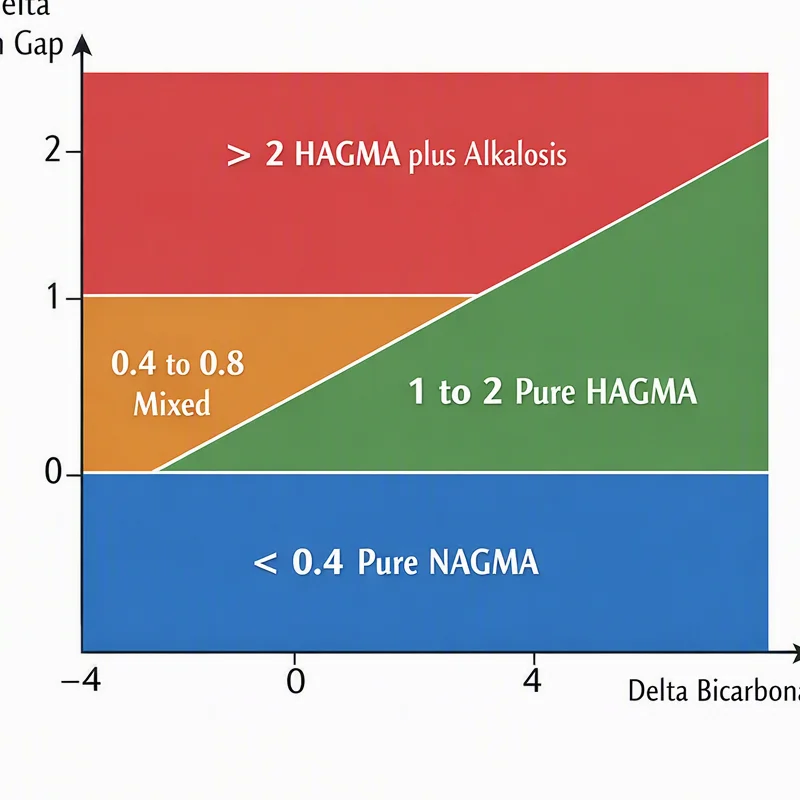
Another helpful concept is the delta difference. This compares the rise in anion gap with the fall in bicarbonate and can suggest whether more than one metabolic process is happening at once. It is especially useful when the clinical picture does not match the expected pattern. A delta gap can reveal a hidden metabolic alkalosis or an additional non-gap acidosis alongside a high-gap disorder.
Practically speaking, the anion gap supports bedside reasoning:
- Is there acidic metabolic disturbance?
- Is the gap increased or unchanged?
- Is albumin low enough to require compensation?
- Do the results agree with the symptoms and other laboratory values?
Common Questions
What is the anion gap calculator with serum sodium used for?
The anion gap calculator using serum sodium helps to easily determine anion gap from routine blood chemistry values. It assists in assess acid-base balance, detect possible metabolic acidosis, and identify patterns such as a high anion gap or normal anion gap. It is especially helpful when reviewing an electrolyte panel that includes sodium, chloride, and bicarbonate.
How do you calculate anion gap from sodium, chloride, and bicarbonate?
Apply the standard anion gap formula: sodium − (chloride + bicarbonate). Enter the measured sodium, chloride, and bicarbonate values, then subtract the sum of chloride and bicarbonate from sodium. This produces the calculated gap, which can then be compared with the normal reference range.
What is a normal anion gap considered to be?
A normal anion gap is based on the laboratory’s method and reference interval, so the best answer is the range printed with the test results. In many labs, the normal reference range is relatively narrow. Always remember to interpret the result using the lab’s reported range and the patient’s overall clinical picture, especially if albumin is abnormal.
Why do you correct the anion gap for albumin?
You correct the anion gap for albumin because low albumin can make the measured gap look falsely normal. With hypoalbuminemia, a true elevation may be hidden. A corrected anion gap gives a more accurate estimate of the acid-base state by adjusting for the loss of this major unmeasured anion. That is why many clinicians choose to correct for albumin when interpreting results.
What does a high anion gap usually mean?
A high anion gap usually means there are extra unmeasured acids in the blood. Common causes include lactic acidosis, ketoacidosis, renal failure, and certain toxins. It often points to metabolic acidosis, but the result should always be interpreted with other laboratory values, symptoms, and the full acid-base pattern.